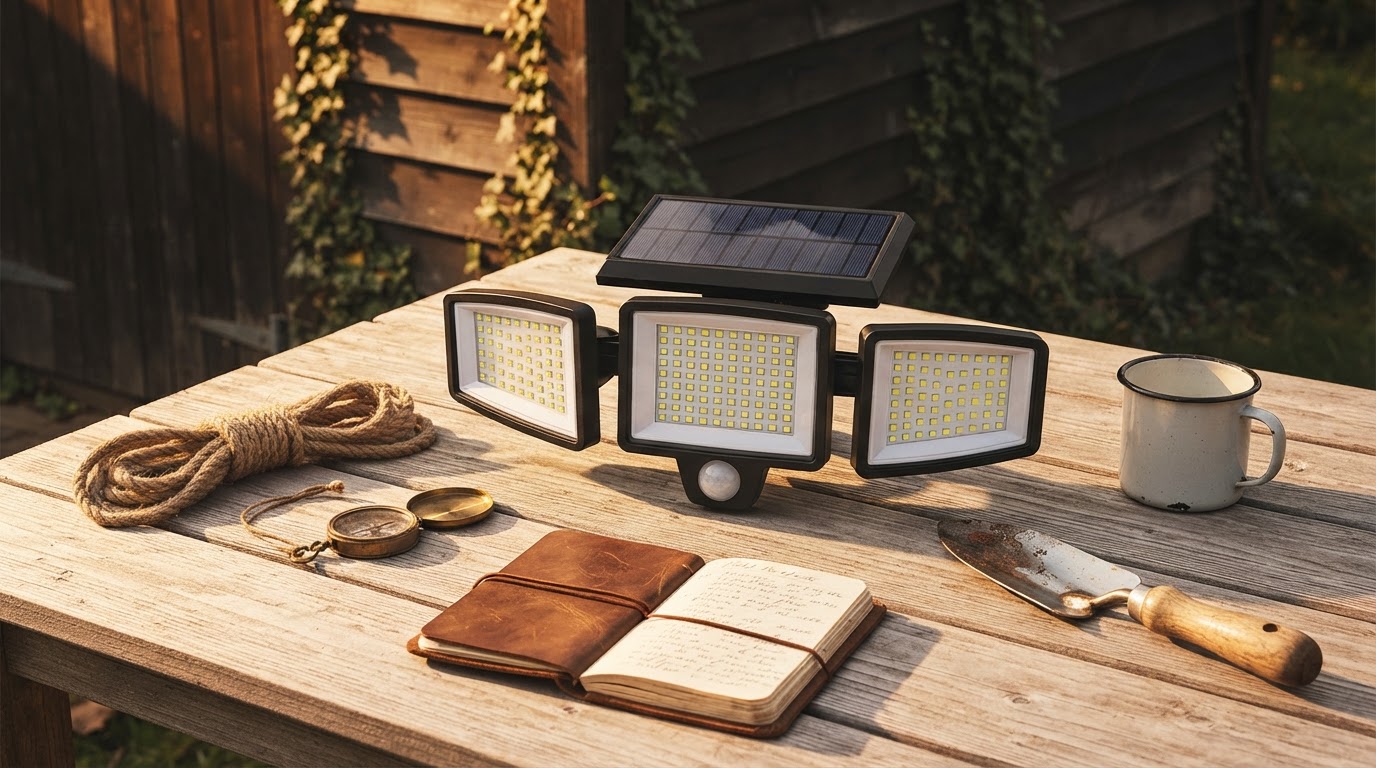
Solving Off-Grid Shed Illumination with Solar Motion Sense Light
 Maya ChenContributing Editor
October 10, 2026. This technical overview examines the implementation of Solar Motion Sense Light systems in structures lacking grid access. It is written for property owners requiring reliable, automated illumination in remote outbuildings.
The Friction of Remote Structure Lighting
The conventional wisdom says that a shed without a hardwired electrical connection is destined to be a dark, hazardous storage space or requires a prohibitively expensive trenching project. Homeowners often default to battery-powered lanterns or unreliable, low-output decorative stakes. However, these solutions fail to address the fundamental need for hands-free, high-lumen output when entering a dark workspace. According to EarthTech Products, solar lighting for sheds and cabins is a primary alternative because it requires no outside electrical wiring and eliminates ongoing energy costs. Yet, the industry consensus often ignores the specific performance gap between static solar lights and motion-activated systems. Static lights drain their battery reserves rapidly, often leaving the user in the dark by mid-evening. In contrast, motion-activated systems preserve stored energy for when it is actually needed. The challenge is not just capturing sunlight, but managing the discharge cycle effectively in structures that may be shaded or oriented away from the southern sky. When users attempt to install solar motion lights for garage eaves or similar fixtures, they frequently overlook the necessity of a detached solar panel that can be positioned independently of the light fixture itself to ensure adequate charging.
Technical Integration of Solar Motion Sense Light
Solar Motion Sense Light addresses the off-grid shed problem by decoupling the energy collection from the light emission. While many generic units integrate the panel and LEDs into a single chassis, high-performance shed applications require a split-circuit design. This allows the Solar Motion Sense Light panel to be mounted on the roof peak while the LED array and PIR (Passive Infrared) sensor are positioned inside the doorway or under the gables. Run the math: a standard 5W solar panel paired with a high-capacity lithium-ion battery can support hundreds of 30-second motion-triggered events even after three days of overcast weather. This is a significant departure from the 'always-on' solar shed lights reviewed by SolarReviews, which often struggle with longevity during winter months. By utilizing a solar motion light wall mount installation, users can secure the fixture to the structural studs of the shed, ensuring the sensor remains aligned even during heavy winds or vibration. This level of stability is crucial for the PIR sensor's accuracy. Furthermore, the integration of these units into a broader security perimeter—linking with solar fence lights motion activated or wireless solar gutter lights motion sensor arrays—creates a cohesive lighting network that activates as a user approaches the shed, rather than only when they are already at the door. The efficiency of the Solar Motion Sense Light lies in its ability to remain in a low-draw 'sleep' state, consuming negligible micro-amps until the heat signature of a human triggers the full LED output.
Decision Framework for Off-Grid Light Selection
Choosing a light for a shed with no electricity requires moving past aesthetic preferences and focusing on hardware specifications. Here's the part nobody talks about: the lumen count is irrelevant if the duty cycle of the sensor is poorly calibrated. A light that stays on for five minutes after a single movement will deplete its battery in a single night of high wind or animal activity. Precision in the PIR sensor's field of view and the duration of the illumination timer are the most critical variables for off-grid reliability. Before finalizing an installation, verify the following technical requirements:
- Separable Solar Panel: The panel must have a minimum 10-foot lead wire to reach the roof from an interior mounting point.
- IP65 Waterproof Rating: Essential for the external panel, even if the light fixture is mounted inside the shed.
- Adjustable PIR Sensitivity: To prevent false triggers from rodents or moving tree branches.
- Battery Chemistry: Prioritize Lithium Iron Phosphate (LiFePO4) for better performance in extreme temperature fluctuations.
- Lumen Density: A minimum of 800 lumens for work areas; 400 lumens is sufficient for basic storage entry.
Shop Solar Motion Sense Light here
Sources
- Solar Shed, Garage and Barn Lights - EarthTech Products
- The 4 Best Solar Shed Lights to Buy in 2025 (Reviewed) - SolarReviews
- Light INSIDE A Shed With No Electricity! Lepower Solar Light